Why 'Room to Grow' Doesn't Work for Pointe Shoes đź©°

On Pointe Dancewear

An Important Message About 
Pointe Shoe Fit
A message from Rhea Lwin, owner/founder of On Pointe Dancewear & professional pointe shoe fitter
Dear Dance Community,

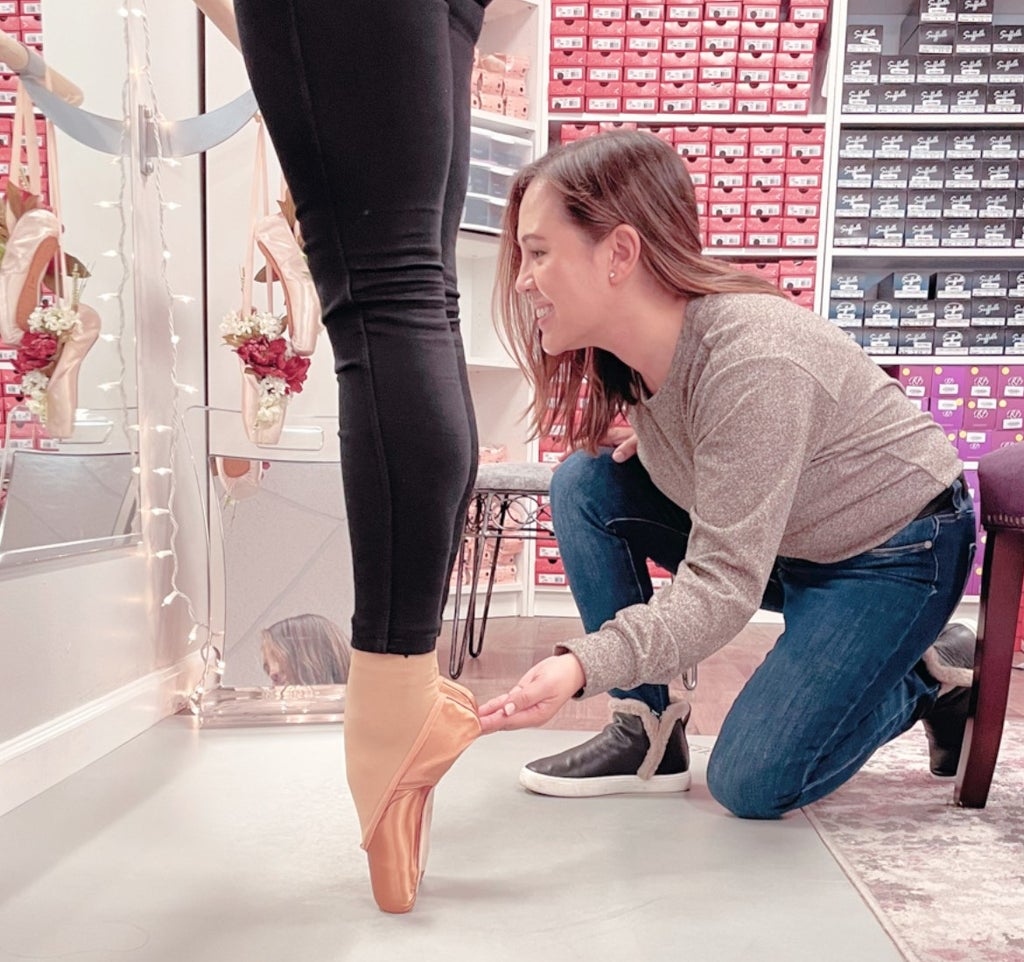
Our fitting team has recently noticed an increase in requests from both parents and teachers asking for pointe shoes with a little “room to grow.” I understand the thinking behind this — pointe shoes are a significant investment, and young dancers’ feet change quickly. However, this is one area where we must be uncompromising about proper fit and I want to explain why.
Why Exact Fit Matters
Pointe shoes are precision tools that must fit the foot exactly as it is today. Even a few millimeters of extra space means the dancer loses control of the shoe, compromising both technique and safety. When there’s room in the shoe, dancers cannot properly articulate or stabilize the foot, which prevents them from building correct strength and placement. Wearing pointe shoes that are too big means you are sacrificing your training.

At On Pointe, we cannot recommend risking a dancer’s health — or worse, permanent bone and joint deformities — to extend the life of a pair of shoes.

Additionally, our fitters are not trained how to fit big. Why would we invest time to learn how to fit incorrectly? If precision fitting didn't matter, you wouldn't need a pointe shoe fitter and we'd all be ordering cheap pointe shoes off Temu or Amazon. 
Six Common Injuries from Pointe Shoes That Are Too Big
Here’s what we often see when shoes don’t fit properly:

Blisters and Friction Burns — The foot slides inside the shoe, causing painful rubbing at the heel, sides, and tips of the toes.

Toenail Trauma — Constant movement inside the box can lead to bruised or lifted toenails from repetitive impact.

Metatarsal Strain — Without a firm fit, the dancer grips and claws to stay balanced, overstressing the small muscles and tendons of the forefoot.

Ankle Sprains and Instability — A loose fit alters balance on pointe, increasing the risk of rolling or twisting the ankle.

Stress Fractures — Overcompensating for poor shoe alignment can shift weight distribution and overload the metatarsals, leading to microfractures over time.

Tendonitis — When the shoe doesn’t hold the foot securely, stabilizing tendons like the Achilles, flexor hallucis longus, and peroneals must overwork to maintain balance. The resulting inflammation can cause chronic pain, stiffness, and long-term injury risk.
The Hidden Cost of Poor Fit
Here’s something that might surprise you: ill-fitting pointe shoes actually wear out faster. When shoes are too loose, dancers tend to sink or sickle in the toe box. As body weight shifts toward the outer toes, the box deforms or widens awkwardly (causing even more sickling), and the platform becomes crooked — making it challenging to stay over the platform and nearly impossible to find a proper balance point. This leads to toe clenching, compensating patterns, and early breakdown of the shoe.
Our Commitment
We know pointe shoes are expensive - believe us, we feel it too when we do our big orders for the store. But the best investment a dancer can make is in a proper fit from the start. Our team is trained to ensure every dancer leaves with shoes that support their training safely and effectively.

If you have any questions about fit or shoe longevity, please don’t hesitate to reach out — we’re always here to help.

Rhea Lwin
Owner & Founder
On Pointe Dancewear